On-chain finance: De Gaulle Fleurance, a leading adviser for CASP and MiCA authorisations
Circle, Bitstack, GOin, Coinhouse, Banque Delubac & Cie, FINCTEK, Paytop, Kaiko… Many French and international on-chain finance players have chosen De Gaulle Fleurance to support them in their regulatory processes in France and across Europe, in particular in obtaining their Crypto-Asset Service Provider (CASP – PSCA in French) authorisation under the European MiCA Regulation. This hands-on experience is now recognised by the leading international legal rankings.
Since 1 July 2026, a new chapter has opened for the European crypto-asset market. The transitional period granted in France to former Digital Asset Service Providers (DASPs – PSAN in French) has come to an end: players wishing to offer crypto-asset services must now hold the status required under the European MiCA Regulation. At the same time, the French Financial Markets Authority (AMF) has entered a phase of full supervision of CASPs and of their compliance with their professional obligations.
In this rapidly structuring market, De Gaulle Fleurance has for several years been advising fintechs, crypto-asset players, stablecoin issuers, banks and financial institutions on defining their regulatory strategy and obtaining their authorisations from the AMF and the French Prudential Supervision and Resolution Authority (ACPR).
De Gaulle Fleurance’s expertise is grounded first and foremost in concrete experience of some of the most significant matters in the French on-chain finance market.
In particular, the group has advised Circle, one of the world’s leading stablecoin players, at several stages of its European expansion from France: for its registration as a DASP with the AMF, for obtaining its electronic money institution (EMI) licence from the ACPR in 2024 — enabling, among other things, the issuance of the USDC and EURC stablecoins under the new European framework — and subsequently for its authorisation as a CASP.
This experience has since extended to a significant number of market players:
- GOin, supported through its regulatory journey under the DASP regime and then in obtaining its CASP authorisation under MiCA;
- Bitstack, which in July 2025 became the first French player to obtain CASP authorisation outside the fast-track or notification procedures;
- FINCTEK UE, supported in obtaining its CASP authorisation;
- Coinhouse, a long-established French crypto-asset player, advised on its transition from DASP to CASP status;
- Banque Delubac & Cie, the first French bank to be registered as a DASP back in 2022, supported in becoming the first to complete the MiCA step under the procedure dedicated to banks;
- Paytop, the French entity of the Triple-A group and a payment institution, advised on obtaining its CASP authorisation;
- The Wigl and Feel Mining platforms, operated by Blockchain Process Security, for their CASP authorisation;
- As well as Kaiko, a global provider of market data and on-chain infrastructure, on its acquisition of Cometh, a DeFi player holding a CASP authorisation, with advice on the regulatory aspects of the transaction and the related AMF procedures.
These mandates give De Gaulle Fleurance first-hand knowledge not only of regulators’ expectations but also of the operational challenges players face when transitioning to MiCA: governance, internal control, anti-money laundering and counter-terrorist financing, client protection, custody and segregation of crypto-assets, IT security, complaints handling, and the organisation of activities at European level.
Expertise that goes beyond CASP authorisation
For on-chain finance businesses, obtaining authorisation is in fact only one component of a much broader regulatory environment.
De Gaulle Fleurance therefore also advises already-regulated financial institutions wishing to provide crypto-asset services under the notification procedure set out in Article 60 of the MiCA Regulation.
The group also advises French and international players on:
- stablecoins and electronic money institution licences;
- activities that also require payment institution or payment service provider status;
- projects falling under the EU DLT Pilot Regime for market infrastructures based on distributed ledger technology, and security tokens;
- applications to the AMF for an ICO visa;
- asset tokenisation projects, in particular for fund units and real estate;
- acquisitions of DASPs, CASPs or other regulated financial entities, including the related due diligence and change-of-control notifications;
- DeFi and NFT projects;
- GDPR compliance;
- drafting and negotiating outsourcing agreements and compliance with the DORA Regulation.
This ability to combine traditional financial law, crypto-asset regulation, technology law, M&A and compliance is becoming increasingly important as the line between traditional finance and on-chain finance continues to blur.
For example, in February 2026 the ACPR clarified the conditions under which certain services relating to e-money tokens may also fall within the scope of payment services regulation — a clear illustration of the growing overlap between regulatory frameworks.
Recognised expertise in on-chain finance
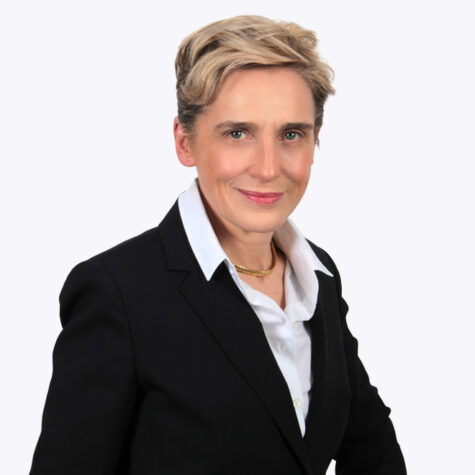
Launched in 2022, De Gaulle Fleurance’s On-chain Finance practice is led in particular by Anne Maréchal, Partner. Anne Maréchal has more than thirty years’ experience in financial law. A former Director of Legal Affairs at the AMF, a position she held for eight years, she notably contributed to drawing up the French digital asset framework introduced by the PACTE Law, a forerunner of the European MiCA regime. She now advises technology companies, fintechs and financial institutions on their crypto-asset, blockchain, DeFi and tokenisation projects.
This expertise is regularly recognised by the leading international rankings.
The Legal 500 2026 ranks De Gaulle Fleurance in Banking and Finance – Financial Services Regulation, describing the firm as particularly well regarded for its work with fintechs and in the crypto-asset space, notably on MiCA authorisations. Anne Maréchal is identified as a recognised figure in digital asset regulation, and Julie Bader, another lawyer within the Group, is named as a Key Lawyer.
Chambers FinTech 2026 ranks De Gaulle Fleurance in Band 3 – FinTech Legal France and Anne Maréchal in Band 2, highlighting in particular the Group’s expertise in blockchain, crypto-assets and European regulation.
Anne Maréchal is also listed in the 2027 edition of Best Lawyers France, having been recognised in previous editions, while Julie Bader is recognised in Best Lawyers: Ones to Watch in France 2027.
After MiCA authorisations: the era of supervision and litigation
The market is now entering a new phase.
For several years, the top priority for on-chain finance players was to build a regulation-compliant business model and obtain the necessary authorisations. With MiCA now fully in force, their needs are gradually shifting towards ongoing compliance, regulatory inspections, growth transactions and litigation.
Since July 2026, the AMF has indicated that its teams are now focused on scaling up its mission of supervising CASPs’ compliance with their professional and conduct-of-business obligations.
The first court applications of the new European framework are also emerging. In 2026, for example, the Paris Judicial Court directly applied the provisions of MiCA in proceedings brought by the AMF against a platform offering crypto-asset services in France without authorisation, resulting in access to the website being blocked.
More broadly, the proliferation of crypto-assets, stablecoins, decentralised protocols and blockchain-based financial infrastructures is giving rise to new categories of disputes: relationships between platforms and users, intermediary liability, transaction execution, asset custody, cyberattacks, anti-money laundering, disputes between partners or investors, as well as litigation with supervisory authorities.
For on-chain finance players, the question is therefore no longer simply one of obtaining MiCA authorisation, but of securing their business model and operations over the long term in an environment that is now fully regulated — and increasingly litigious.
From authorisation to compliance, from tokenisation to external growth transactions, and from dealings with regulators to handling the first disputes, De Gaulle Fleurance supports this new stage in the digital transformation of finance.